
Commercial Truck Repair Service 2026: Fleet Guide

Table of Contents
Last Updated: October 19, 2026
What Commercial Truck Repair Service Looks Like in 2026
A commercial truck repair service in 2026 looks different from the shop your father used.
This guide from Ideal Truck Service breaks down what fleets should expect this year. We have run a 9-bay shop with 8 service trucks since 1988.
The biggest shift: repair shops are now data partners.
Truck repair done well starts with one question. Do you want a vendor or a partner? The answer changes everything below.
Shop-Based vs. Mobile Repair: How to Choose
Shop-based repair suits heavy jobs: engine overhauls, drivetrain work, and anything needing a lift or diagnostic bay. Mobile repair wins for inspections, brakes, and small fixes at your yard.
Choose shop-based when the truck cannot move safely or the job needs major teardown.
Factor | Shop-Based | Mobile |
Best for | Engine, drivetrain, major diagnostics | PM service, brakes, electrical |
Truck must move | Usually no | Yes |
Downtime | Higher | Lower |
Cost driver | Labor hours, parts | Trip charge, labor hours |
A common mistake is hauling every truck to a shop for routine work, burning hours you never bill back.
Commercial Truck Preventive Maintenance Schedules That Prevent Breakdowns
Preventive maintenance is the cheapest repair you will ever buy. A scheduled inspection catches a worn brake chamber before it fails on a loaded trailer.
Most fleets follow a mileage-based schedule. A common approach is:
A-service every 10,000-15,000 miles: oil, filters, fluid checks, tire pressure
B-service every 25,000-30,000 miles: full inspection, brake adjustment, chassis lube
Annual DOT inspection: required once every 12 months under federal rules
The FMCSA inspection requirements set the annual inspection standard. Build your schedule around it, not against it.
What most guides miss: the schedule is a floor, not a ceiling. Short-haul trucks with constant stop-start wear out brakes faster than mileage suggests, so match intervals to duty cycle, not just the odometer.
Pro Tip Pull a used oil sample at every A-service. It costs little and tells you about engine wear long before a failure shows up on the dashboard.
Mobile Commercial Truck Repair: When It Beats Towing to a Shop
Mobile repair beats towing when the truck still runs and the fix fits on a service truck.

Call mobile for:
Brake adjustments and air leaks
Electrical faults and lighting
Belt, hose, and filter swaps
Call a tow when the truck cannot move safely, the repair needs a lift, or the diagnosis points to internal engine or drivetrain damage.
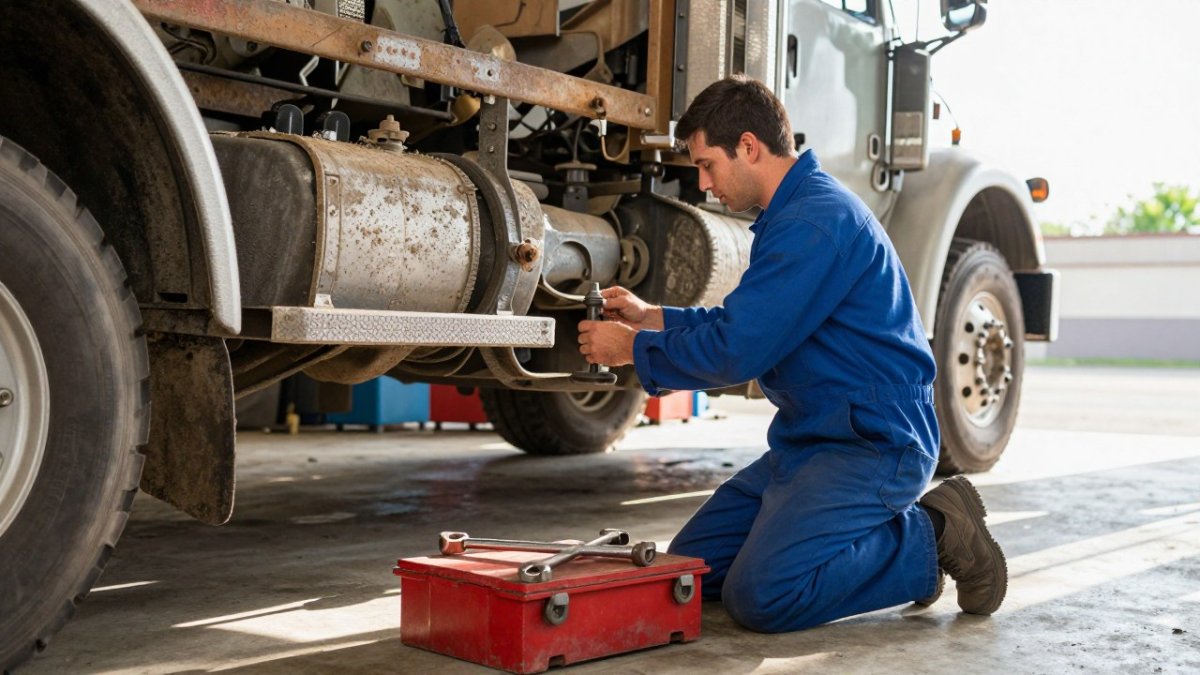
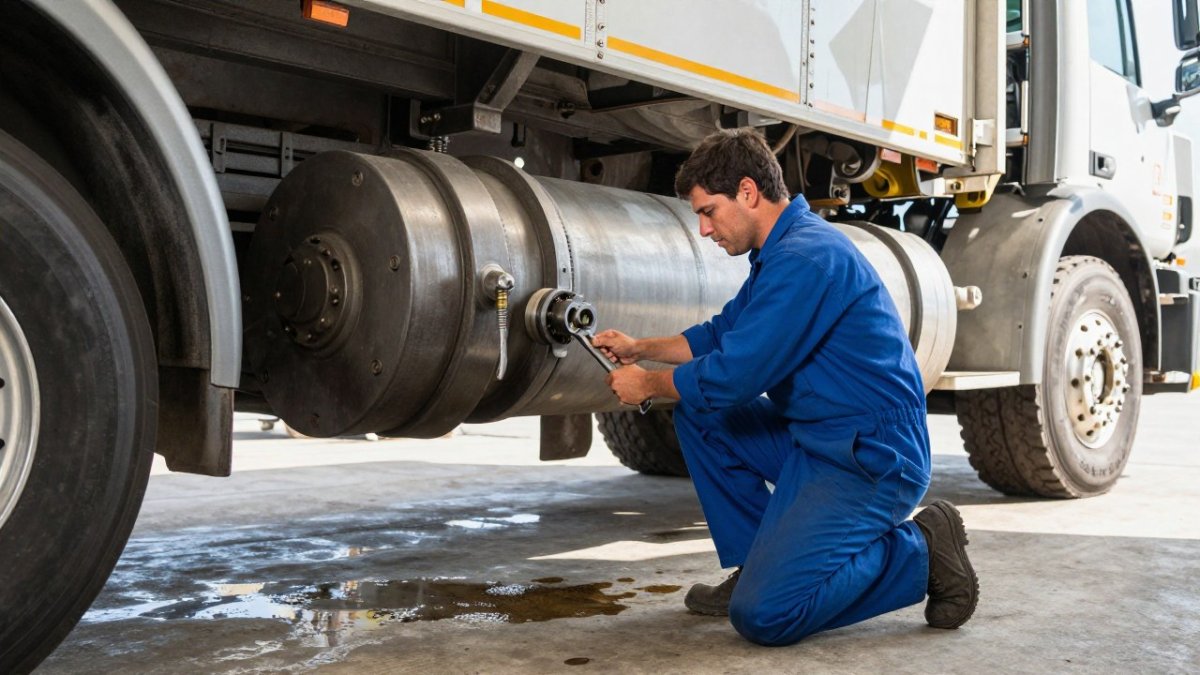
At Ideal Truck Service, our 8 service trucks carry the tools for on-site PM work. That means fewer rigs leaving your yard for routine service.
Semi-Truck PM Service Cost: What Drives the Price
Semi-truck PM service cost depends on four things: the service tier, the truck's age and condition, parts quality, and whether the work happens in a shop or on site. We do not publish flat prices because two trucks on the same schedule rarely cost the same, but here is how the numbers break down.
What a Typical PM Invoice Includes
A standard A-service invoice usually has four line items:
Labor, billed at the shop's posted hourly rate, typically 1.0 to 2.0 hours for an A-service on a Class 8 tractor.
Filters, oil, fuel, and sometimes air; OEM versus aftermarket is the biggest swing here.
Fluids, engine oil by the gallon, plus top-offs for coolant and DEF.
A B-service adds brake adjustment, chassis lube, and a fuller inspection, pushing labor hours up and often surfacing findings that turn a PM into a repair.
The Cost Drivers, Ranked
Service tier. An A-service costs less than a full B-service with brake work. The gap is mostly labor hours and the brake hardware.
Parts choice. OEM parts cost more than aftermarket. Warranty coverage often depends on this choice, an aftermarket part can void coverage on the system it touches.
Findings. A routine PM that uncovers a bad wheel seal, a cracked spring, or a worn brake chamber becomes a bigger job. Budget a contingency for findings; a PM with zero findings on a high-mileage truck is the exception, not the rule.
Location. Mobile work adds a trip charge but removes towing and travel time. For a truck that runs, the mobile premium is often smaller than the tow it replaces.
Duty cycle. Short-haul and stop-start routes wear brakes and clutches faster, so the same mileage interval produces more findings.
Preventive PM vs. Reactive Repair: The Cost-Per-Mile Math
Reactive repair always costs more per mile than planned maintenance. A scheduled brake job is labor and parts; a brake failure on the road adds towing, emergency labor at a premium rate, lost delivery time, and a driver stuck roadside.
Cost-per-mile reduction comes from shifting spend forward: pay a little now for inspection and adjustment, avoid paying a lot later for failure and downtime.
Pro Tip Ask your shop to quote PM as a per-unit, per-interval number rather than a one-off price. That lets you compare vendors on the same basis and build the cost into your rate per mile.
Get a written repair estimate before work starts. A good shop itemizes parts and labor per line; if a quote arrives as one lump number, ask for the breakdown and which parts are OEM versus aftermarket, since that choice affects both the invoice and your warranty position.
Your Commercial Truck Repair Service Checklist
Use this checklist when evaluating any commercial truck repair service. It works for a first visit or a contract renewal.
Written repair estimates before work begins
OEM-certified technicians on staff
Diagnostic software for heavy-duty engines
Score each item honestly. A shop that checks eight of ten is worth a conversation. One that checks four is a risk to your fleet.
Watch Out Skipping the warranty documentation step costs fleets real money. If the shop does not file the claim correctly, the failed part becomes your invoice instead of the manufacturer's.
Minimizing Fleet Downtime With Digital Fleet Management and Warranty Records
Fleet downtime rarely comes from one big failure. It comes from small delays stacked together: waiting for approval, parts, and paperwork. The fix is connecting the data your truck already produces to the shop that repairs it.
Where Downtime Actually Hides
Most fleets can name their last breakdown. Fewer can name the four hours lost waiting for repair approval, the day lost to a part ordered against the wrong VIN, or the week lost to a warranty claim filed after the deadline. Those are process failures, not mechanical ones, and where digital integration pays off.
How Repair Shops Integrate With Telematics
Modern heavy-duty engines broadcast fault codes and performance data through the telematics unit your fleet already runs. A shop set up for digital integration can:
Pull fault codes before the truck arrives, the technician starts with the code history instead of a blank diagnostic session.
Match the repair to the VIN and service history, parts are ordered against the right unit, not a similar-looking truck.
Flag repeat failures, if the same code returns after a repair, the shop sees the pattern and escalates instead of repeating the same fix.
This is the B2B angle most repair-shop content ignores: the shop is not just a wrench, it is a data node in your maintenance program. Ask a prospective shop whether they can receive telematics exports or fault-code reports from your fleet management software, and whether their records export back to you in a usable format.
Warranty Management: The Quiet Saver
Every OEM part carries coverage. If nobody tracks the claim, you pay twice for the same failure. A shop that files warranty claims turns a repair invoice into a covered replacement, but only if the documentation is complete.
What a warranty-ready record needs:
The VIN and the part number, matched to the repair
The failure description and the diagnostic code that led to it
The date and mileage at failure
Missing any one of these is the most common reason a claim is denied. A shop that stores this digitally can produce it on request; a shop that keeps paper cannot.
Watch Out Warranty claim windows are finite. A claim filed after the manufacturer's window closes becomes your invoice. Ask your shop who owns the claim calendar, if the answer is vague, assume it is you.
What to Ask Before You Connect Systems
Can you receive fault-code and telematics exports from our fleet software?
Do you return service records in a format we can import?
Who files warranty claims, and how do you track the claim window?
Can you show a sample record from a fleet like ours?
Key Takeaway Ask any shop one question: "Can you show me my fleet's service history in one place, and can you take data from our telematics system?" If the answer to either is no, your downtime is being managed by memory.
DOT Compliance and Safety Inspections: What Fleets Must Document
DOT compliance is a paperwork job as much as a mechanical one.
What to document:
Annual inspection reports, signed by a qualified inspector
Driver vehicle inspection reports
Brake adjustment records
Maintenance and repair history per unit
The FMCSA maintenance and inspection rules spell out the recordkeeping side. Missing records can ground a truck even when the truck itself is sound.
This is where a service contract earns its keep. A shop that stores inspection records and hands them over audit-ready removes a real headache, and compliance stops being a scramble.
Choosing a Commercial Truck Repair Service in 2026
Choosing a commercial truck repair service comes down to three tests: capability, reliability, and documentation. Capability means handling your whole fleet, not just one brand. Reliability means answering the phone in year five, not just year one. Documentation means every repair is recorded and every warranty claim filed.
A family-owned shop that has operated since 1988 passes the reliability test by default.
Questions to Ask Before You Sign a Service Contract
Can you service our full mix of trucks, including Isuzu?
Do you offer on-site PM at all our locations?
How fast do you return a repair estimate?
Who files warranty claims, you or us?
Ask for proof, not promises. A shop with real answers will not hesitate.
Your fleet's downtime is a choice more than a fate. Every breakdown you prevent is revenue you keep, and winning fleets treat maintenance as a schedule, not an emergency.
Ideal Truck Service has handled that schedule for Gulf Coast fleets since 1988.
Call 251-432-8962 and get a tailored service contract that keeps your trucks moving.
Frequently Asked Questions
How much is a PM service on a semi-truck?
There is no single figure. Semi-truck PM service cost depends on the service interval, the truck's make and model, fluid and filter requirements, and whether the work is done in a shop or on site. A basic oil and filter service costs far less than an interval that also includes brake inspection, drivetrain checks, and DPF system service. Ask your provider for a written estimate broken down by line item, and compare that against the cost of an unplanned breakdown. Ideal Truck Service can quote current pricing for your specific fleet.
When should a commercial truck receive preventive maintenance?
Follow the manufacturer's interval for your make and model, then tighten it based on duty cycle. Trucks running short-haul delivery routes with frequent stops accumulate brake and DPF wear faster than highway miles suggest, so many fleets shorten intervals for those units. A practical rule: schedule commercial truck preventive maintenance by whichever comes first, mileage or months in service, and never let a truck leave the yard with an overdue PM. Keep every inspection record, since it supports DOT compliance and warranty claims.
When should a truck be repaired by a mobile service instead of taken to a shop?
Mobile commercial truck repair fits when the truck cannot safely or legally be driven, when the fix is a known job a service truck can complete on site (brakes, electrical diagnostics, air system leaks, trailer repair), or when moving the unit costs more in downtime than the repair itself. Shop-based work makes more sense for heavy diagnostics, engine or drivetrain teardown, and jobs needing a lift or specialized bay equipment. Ask the provider to confirm the scope before dispatch.
What should fleet managers look for in a commercial truck repair service?
Look for documented turnaround times, factory-authorized service on the brands you run, mobile capability across all your locations, and a written commercial truck repair service checklist used on every visit. Confirm they handle DOT compliance inspections and keep warranty documentation in order. A provider that can service your whole mixed fleet, not just one brand, saves you from splitting maintenance between vendors.

Comments