
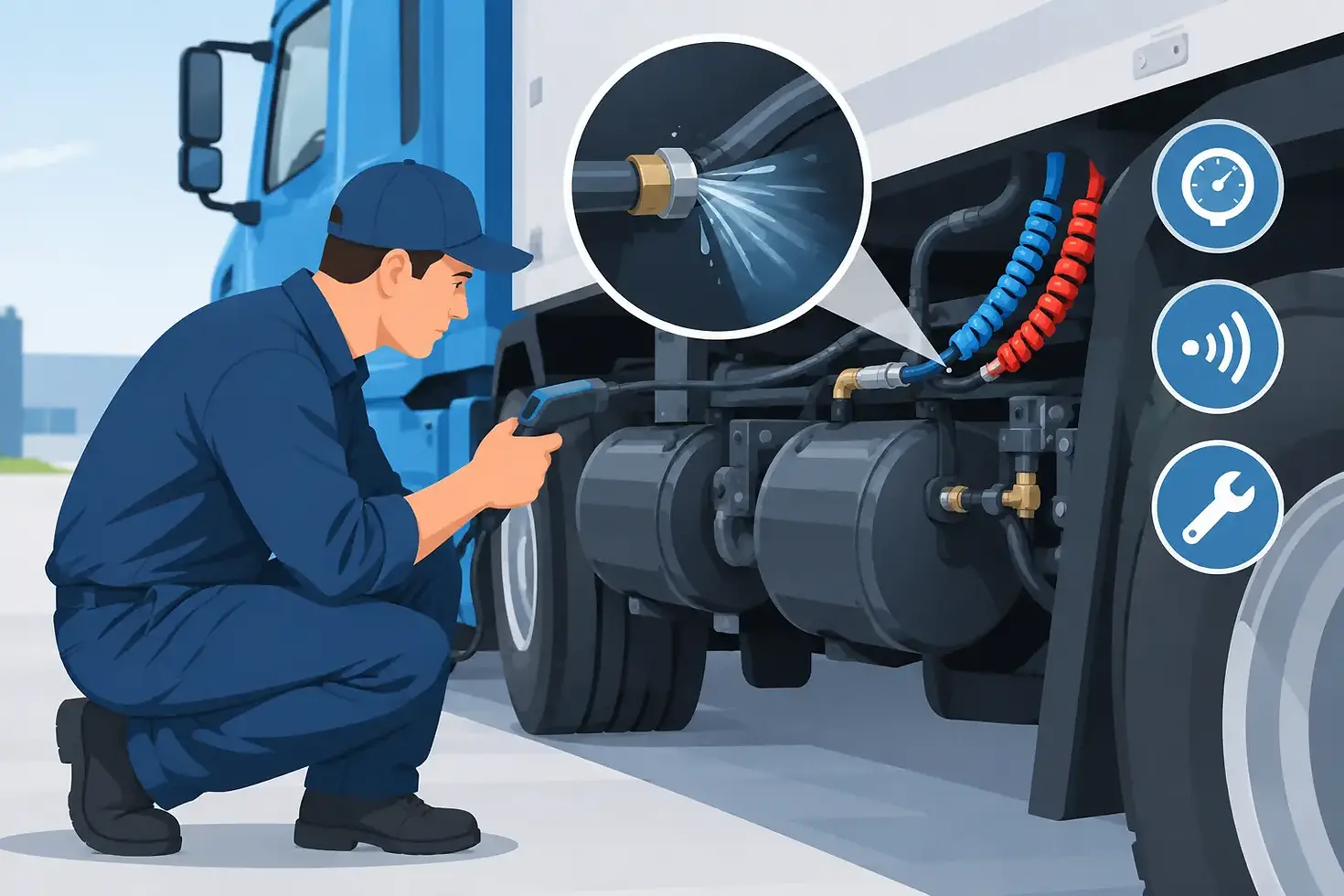
How to Diagnose Truck Air Leaks Before Downtime

A truck that takes too long to build air, cycles its compressor constantly, or loses pressure while parked is sending a clear warning: find the leak before it becomes an out-of-service problem. To diagnose truck air leaks properly, technicians need to look beyond the sound of escaping air and consider the entire system - from the compressor and air dryer to reservoirs, valves, fittings, and brake chambers.
For a working truck, an air leak is not a small nuisance. It can delay a driver at the yard, reduce braking performance, create a DOT compliance concern, and put a revenue-producing unit on the roadside. A disciplined inspection helps identify the actual source, make the right repair, and avoid replacing parts that are not causing the problem.
Start With the Symptoms and a Safe Setup
Before testing, park the truck on level ground, chock the wheels, and follow the manufacturer’s safety procedures. Never work beneath a vehicle supported only by air suspension or hydraulic equipment. If the system has a serious pressure-loss issue, the truck may not remain safely parked without proper wheel chocks.
Begin by asking what the driver has noticed. Slow pressure buildup, frequent compressor cycling, low-air warnings, audible leaks after shutdown, and brakes that do not release or apply normally can point toward different parts of the system. A leak that happens only with the brakes applied is not diagnosed the same way as a leak that continues with the engine off and parking brakes set.
Build full system pressure before beginning a leak-down check. Watch the air gauges and note whether the primary or secondary circuit is losing pressure faster. That distinction can help narrow the inspection toward a particular brake circuit, reservoir, or valve.
How to Diagnose Truck Air Leaks Step by Step
A quality diagnosis follows the air path instead of jumping straight to the most obvious fitting. Start at the compressor discharge area and work toward the reservoirs, supply lines, control valves, and brake components. Listen closely, but do not rely on hearing alone. Road noise, engine noise, and the location of the leak can make a small but critical failure difficult to hear.
With the engine off and the system charged, listen around fittings, hoses, air tanks, the air dryer, leveling valves, brake chambers, and valve assemblies. A steady hiss may identify a major leak quickly. Smaller leaks are often easier to find with an approved leak-detection solution applied to suspect connections. Bubbles that continue to form identify escaping air.
The condition under which the leak appears matters just as much as its location. Check the system in several positions: with the service brakes released, with the service brakes applied, with the parking brakes applied, and after the engine has been shut down. Have a second person apply and release the brakes when needed, while keeping the work area safe.
A leak at a brake chamber may only appear during brake application. A leak around a relay valve or quick-release valve can be related to how air is exhausting rather than a failed airline connection. An air dryer purge valve that continues leaking after its normal purge cycle may indicate contamination, wear, or a system issue upstream of the dryer.
Common Truck Air Leak Locations
Age, vibration, heat, moisture, and road debris all work against an air system. On Gulf Coast trucks, humidity and corrosion can accelerate problems at fittings, tanks, and exposed hardware. The most common sources deserve close attention during every inspection.
Air Lines, Hoses, and Fittings
Rubber hoses can crack near bends, clamps, or connection points. Nylon air lines may become brittle over time or rub against frame components until a pinhole develops. Look for abrasion, kinks, unsupported sections, and lines routed too close to heat sources or moving components.
Fittings can leak because of damaged threads, worn seals, improper installation, or contamination. Tightening a fitting without understanding why it leaked may only hide the problem temporarily. If the airline is cut unevenly, damaged at the end, or not fully seated, replacing the fitting alone may not provide a lasting repair.
Air Dryer and Compressor Connections
The air dryer manages moisture before it can cause corrosion and cold-weather problems farther downstream. Leaks at the purge valve, delivery ports, mounting connections, or nearby lines should be evaluated carefully. A recurring dryer issue may point to an overdue cartridge, excessive compressor oil carryover, or a problem with the governor or unloader system.
Compressor discharge lines operate under high heat. Inspect them for damage, loose connections, and evidence of heat-related deterioration. A compressor that runs continuously is not always the source of the leak, but it is often the component working hardest because of one.
Reservoirs, Drains, and Valves
Air tanks can corrode internally and externally. Check around tank seams, drain valves, mounting straps, and ports. Moisture draining from tanks is normal to a degree, but heavy water accumulation can signal an air dryer service issue that will eventually affect valves and brake components.
Relay valves, protection valves, quick-release valves, and leveling valves can leak through exhaust ports when internal seals wear or contamination interferes with normal operation. Replacing a valve may be appropriate, but the technician should also inspect the condition of the air supply and surrounding lines. Otherwise, moisture or debris can damage the replacement part prematurely.
Brake Chambers and Parking Brake Components
A leaking service brake chamber diaphragm can affect brake application and must be addressed promptly. Listen at the chamber and inspect for leakage during service brake application. Spring brake and parking brake issues require additional caution because stored spring force is involved. Never attempt to disassemble a spring brake chamber unless you are trained, equipped, and following approved service procedures.
If pressure loss occurs only when the parking brakes are released, inspect the parking brake circuit, spring brake chambers, and associated control valves. The timing of the leak is often the best clue.
Measure Pressure Loss, Not Just the Noise
Some leaks are obvious. Others are too small to hear but large enough to create operating problems over a shift or overnight. A timed pressure-loss test provides useful evidence. With the system fully charged and the engine off, monitor the gauges under the appropriate conditions specified by the truck manufacturer and applicable regulations.
The acceptable loss rate depends on the vehicle configuration and test condition. A tractor-trailer combination, for example, has more components and air volume than a straight truck. Use the correct standard for the equipment being inspected rather than relying on a one-size-fits-all number.
Pressure behavior can also reveal a restriction or charging issue rather than a simple external leak. If the truck takes too long to build pressure but holds it well once charged, inspect compressor performance, the governor, air dryer operation, and potential restrictions in the discharge system. If it builds pressure normally but drops quickly after shutdown, focus on leak-down testing.
Avoid Repairs That Create Repeat Failures
A quick patch may get a truck moving, but it is not always the right fleet repair. Splicing a rubbed-through air line without correcting the routing problem invites another failure. Replacing an air dryer cartridge without checking for compressor oil contamination can shorten the life of the new cartridge. Changing a leaking valve while ignoring water and debris in the tanks can create the same problem again.
The right repair includes correcting the root cause, securing lines properly, using compatible air-system components, and verifying the system after the work is complete. Recharge the system, repeat the leak check, confirm proper compressor cycling, and test brake operation before returning the truck to service.
For fleet managers, documenting the repair matters too. Repeated leaks on the same unit may reveal a route issue, vibration point, recurring moisture problem, or a maintenance interval that needs adjustment. That information helps turn a reactive repair into a more reliable preventive maintenance plan.
When Mobile or Shop Support Makes Sense
A minor accessible air-line leak may be repaired on-site when the truck is safely parked and the needed parts are available. Complex leaks involving brake controls, air dryer performance, compressor output, multiple circuits, or damaged components are often better handled with full diagnostic equipment and a thorough inspection.
Ideal Truck Service works with fleets that cannot afford to treat air-system problems as guesswork. Whether the truck needs field support or shop-level repair, the goal is the same: identify the leak accurately, restore safe operation, and keep downtime from spreading across the day’s schedule.
An air leak rarely improves on its own. Addressing the first warning - a slow build, a steady hiss, or a compressor that will not get a break - protects braking performance and gives your truck a better chance of making the next job on time.



Comments