
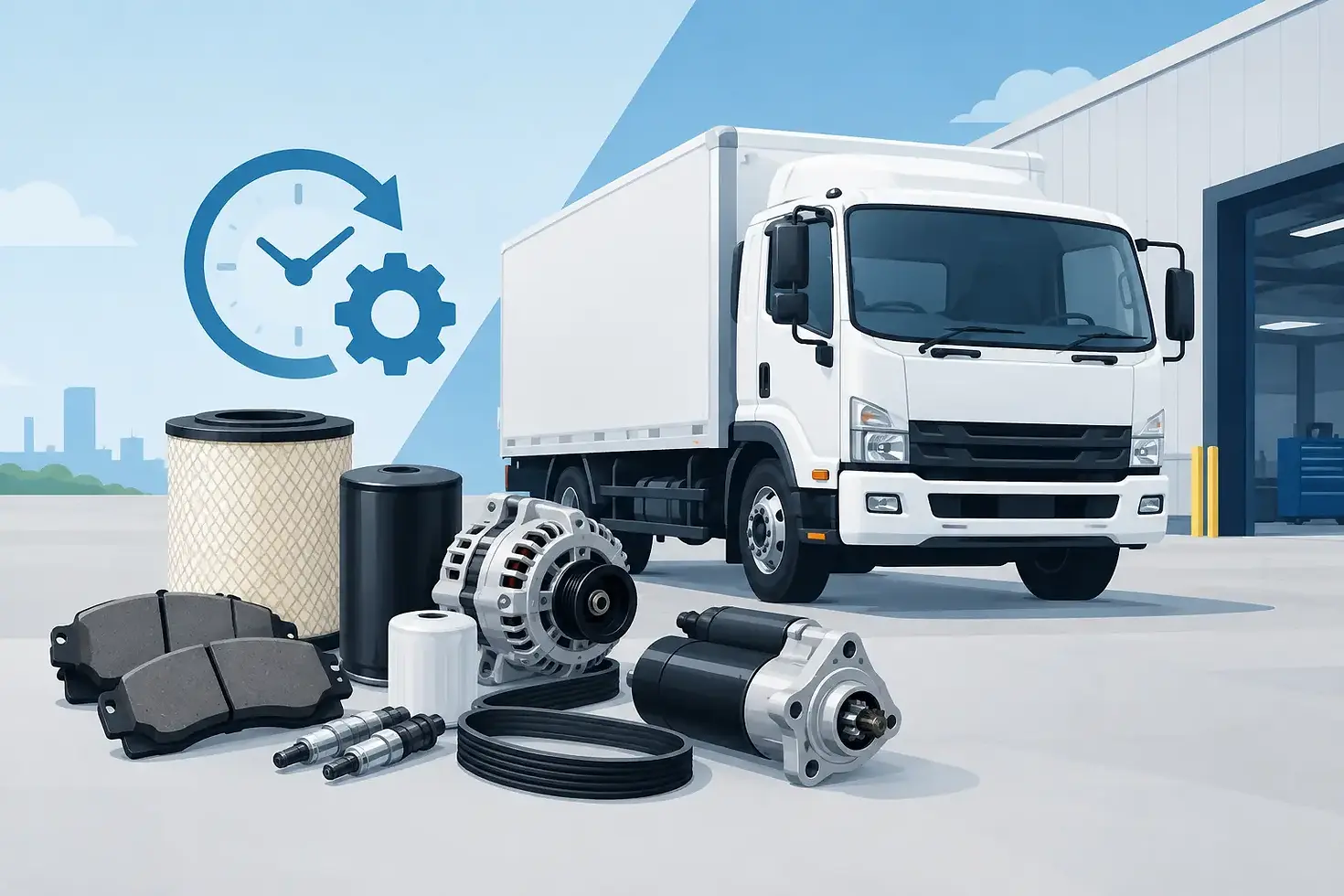
Isuzu Parts Guide for Commercial Truck Uptime

A part that looks right can still put an Isuzu truck out of service. A sensor with the wrong calibration, a filter that does not meet the application requirements, or a brake component that does not match the axle can turn a straightforward repair into repeat downtime. This Isuzu parts guide is built for owners and fleet managers who need the right component, the first time, so working trucks can return to the road with confidence.
Start With the Truck’s Exact Application
The fastest way to order the wrong part is to identify a truck only by its make and model. An Isuzu NPR, NQR, or FTR designation is useful, but it is not enough for many engine, emissions, electrical, and driveline components. Production changes can occur within the same model year, and similar-looking components may use different connectors, software, mounting points, or pressure specifications.
Before approving a part, confirm the VIN, model year, engine model, engine serial number, transmission information, and the truck’s current configuration. If the truck has a body-mounted PTO, refrigeration equipment, auxiliary fuel system, or a modified upfit, that information may affect what fits and how the repair is completed.
For engine-related parts, the engine serial number is especially valuable. Fuel-system components, turbochargers, sensors, gaskets, and emissions hardware often need to match the engine family rather than the truck badge alone. Taking a few extra minutes at the identification stage can prevent a truck from occupying a bay while the correct replacement is sourced.
Isuzu Parts Guide: Choose the Right Part Type
There is no single right answer for every repair. The best part depends on the truck’s age, duty cycle, remaining service life, warranty needs, and the cost of having that unit down again next week. A delivery truck making daily routes has different needs than a lower-mileage backup vehicle.
Genuine OEM parts are generally the right choice when fit, calibration, emissions compliance, or warranty coverage is critical. This is often the case for electronic engine controls, fuel-system parts, DPF-related components, and sensors that communicate with the vehicle’s control modules. The lower upfront price of an alternative part does not help if it creates a fault code, causes poor performance, or has to be replaced early.
Quality aftermarket parts can be a practical option for selected maintenance and chassis repairs. Filters, belts, hoses, brake components, suspension items, and some lighting or body hardware may offer reliable value when sourced from a proven manufacturer and matched correctly. The key is not simply choosing aftermarket versus OEM. It is choosing a part with the correct specifications and a supplier that stands behind it.
Remanufactured components also have a place in fleet maintenance, particularly for certain starters, alternators, turbochargers, and major assemblies. Ask what was replaced during remanufacturing, whether the unit was tested, what core requirements apply, and how labor warranty is handled. A reman unit can reduce repair cost, but only if its quality and warranty support fit the truck’s role in your operation.
Prioritize Parts That Affect Uptime and Compliance
Some parts can be scheduled around a planned service window. Others deserve immediate attention because they affect safety, reliability, or the ability to operate legally. Brake wear, damaged air lines, steering and suspension concerns, tire-related issues, and lighting faults should not wait for a more convenient day.
On late-model diesel trucks, emissions components deserve the same level of attention. A failed DPF sensor, exhaust temperature sensor, NOx sensor, doser component, or damaged exhaust connection can lead to derates, warning lights, failed regenerations, and eventually a truck that cannot complete its route. Replacing a failed component without checking the root cause can be expensive. Excessive soot loading, wiring damage, exhaust leaks, fuel-system issues, and operating patterns that prevent proper regeneration can all contribute to repeat faults.
Fuel-system repairs require similar discipline. Modern diesel fuel systems operate under high pressure and have tight contamination tolerances. A failing injector, restricted fuel supply, water-contaminated fuel, or a poor-quality replacement component can create problems well beyond the original repair. Clean work practices, correct filtration, and a proper diagnostic process protect the new part and the rest of the system.
Do Not Replace Parts Before Confirming the Failure
Parts replacement should solve a verified problem, not guess at one. A warning light may point toward a circuit or system, but it does not automatically identify the failed component. For example, a low-pressure reading can result from a failed sensor, damaged wiring, a supply problem, a restriction, or an actual mechanical issue.
A sound diagnostic process includes fault-code review, visual inspection, connector and harness checks, live data, pressure or voltage testing, and confirmation after repair. This approach may take longer than swapping the most likely part, but it is usually faster than bringing the truck back for the same complaint.
This matters even more when several trucks show similar symptoms. A recurring fault across a fleet may indicate a maintenance interval issue, fuel quality concern, driver operating pattern, environmental exposure, or a known weak point in a specific application. Tracking the failure history helps a fleet decide whether to stock a component, change an inspection routine, or address the underlying condition before it affects more units.
Keep Smart Stock, Not a Parts Warehouse
Every fleet benefits from having a few high-use service items available, especially when a missed route or jobsite delay costs more than the part itself. The goal is to stock predictable needs, not tie up cash in components that may sit on a shelf for years.
For many commercial Isuzu applications, sensible stock may include approved filters, belts, common bulbs, wiper blades, spare fuses, select hoses, clamps, air fittings, and frequently used brake wear items. The right mix depends on your truck count, route distance, age of equipment, and access to service support.
Avoid stocking electronic modules, injectors, turbochargers, or emissions components without a clear reason. Those parts can be expensive, application-specific, and subject to revisions. If a component must be stocked because it repeatedly threatens uptime, label it carefully with the applicable VIN range, engine information, purchase date, and warranty documentation.
A maintenance partner can help identify which items make sense for your fleet. Ideal Truck Service works with commercial operators who need practical parts planning, not a one-size-fits-all inventory list. For a small fleet, the better answer may be dependable access to the right parts and responsive repair support rather than maintaining costly shelf stock.
Match Preventive Maintenance Parts to Real Operating Conditions
Manufacturer maintenance intervals provide a starting point, but Gulf Coast operating conditions can justify a closer look. Stop-and-go routes, high idle time, heavy payloads, heat, humidity, construction dust, and short trips can all increase stress on filters, brakes, batteries, cooling systems, and emissions equipment.
A truck that spends most of its day on the highway will not wear parts the same way as a truck making local deliveries with frequent idling and regeneration interruptions. Preventive maintenance should reflect those differences. Review inspection findings, driver reports, repair history, and duty cycle rather than relying only on mileage.
When a service is scheduled, consider related parts and labor at the same time. Replacing worn belts while cooling-system access is already open, inspecting hoses during a water-pump repair, or measuring brake components across an axle can reduce future downtime. That does not mean replacing every nearby part automatically. It means using the service opportunity to make an informed decision about condition and labor overlap.
Document Every Part and Repair
Good records make future repairs quicker and more accurate. For each replacement, keep the part number, brand, installation date, mileage, technician notes, diagnostic findings, and warranty details. If the truck returns with a related concern, that history gives the service team a much stronger starting point.
Documentation also helps fleet managers see the full cost of a repair pattern. A part that appears inexpensive may not be economical if it fails early, requires repeated labor, or creates more road calls. Over time, those records support better purchasing choices and more realistic replacement planning.
The right Isuzu part is not simply the component that bolts on. It is the part that matches the truck, addresses the verified issue, supports safe operation, and gives your business the best chance of making the next delivery without interruption. When a repair decision affects a revenue-producing truck, accurate identification and experienced service are worth protecting.


Comments