

What Happens During Fleet Inspections for Trucks

A truck does not have to be broken down on the shoulder to cost a business money. A slow air leak, uneven tire wear, a weak battery, or a brake component nearing its limit can turn an ordinary route into an out-of-service event. That is why understanding what happens during fleet inspections matters to anyone responsible for working trucks. The purpose is not simply to check a compliance box. It is to find developing problems while there is still time to schedule repairs around the work.
For fleet managers, contractors, and owner-operators, a good inspection creates a clear picture of each vehicle's condition. It helps prioritize repairs, document maintenance decisions, and keep trucks safer and more dependable between service visits.
What Happens During Fleet Inspections?
A fleet inspection is a structured review of a truck's safety-critical systems, operating condition, and maintenance status. The scope depends on the vehicle, its duty cycle, mileage, age, and the type of inspection being performed. A daily driver vehicle inspection report is different from a scheduled preventive maintenance inspection, and both differ from a thorough annual DOT inspection.
In a professional shop setting, the process usually starts before a technician turns a wrench. Service records, driver reports, fault codes, recent repairs, and recurring issues are reviewed first. If a truck has been coming in with the same warning light, frequent regenerations, brake concerns, or starting trouble, that history helps direct the inspection.
The truck is then inspected inside, outside, underneath, and, when needed, on diagnostic equipment. The goal is to identify conditions that require immediate attention, items that should be planned for soon, and components that are functioning properly but should continue to be monitored.
The Inspection Begins With the Driver and the Records
Drivers often notice a problem first. A vibration at highway speed, a steering pull, a longer crank before starting, a new noise under load, or a warning light that comes and goes can provide useful clues. An effective fleet inspection includes those observations instead of treating the truck as though it arrived with no history.
Maintenance records matter for the same reason. A technician may check when the oil was last changed, whether brake work was recently performed, how old the batteries are, and whether the truck has had repeated emissions-system faults. This prevents duplicate work and helps the fleet make decisions based on the full condition of the vehicle, not a single symptom.
For a fleet, accurate records also support preventive maintenance scheduling. They show which units are consuming more repair time, which components fail repeatedly, and where a change in service intervals may be worthwhile.
A Walk-Around Checks the Truck's Visible Condition
The outside inspection is more than a quick look at the paint and lights. Technicians check for fluid leaks, loose or damaged body components, cracked mirrors, windshield damage, and signs of impact around the cab, bumper, steps, and cargo area. They also inspect the frame, suspension components, mounts, and other visible areas for damage, corrosion, or loose hardware.
Lighting is checked because a truck can be mechanically sound and still create a safety or compliance issue with an inoperative lamp. Headlights, turn signals, marker lights, brake lights, hazard lights, reflectors, and license plate lighting all need attention. Trailer connections and electrical plugs may also be inspected when they are part of the vehicle's daily work.
A walk-around can reveal operational concerns that are easy to overlook during a busy day. A fresh oil spot under a parked truck, for example, may point to a minor seep or a leak that needs prompt diagnosis. Catching it early can prevent a larger repair, lost fluid, and an avoidable road call.
Tires, Wheels, and Brakes Receive Close Attention
Tires and brakes deserve careful inspection because they affect stopping distance, handling, fuel economy, and operating costs. Technicians inspect tread depth, tire pressure, sidewall damage, irregular wear, exposed cords, and evidence of rubbing or contact. Uneven wear can indicate an alignment problem, worn suspension parts, incorrect inflation, or a wheel-end issue.
Wheels are checked for cracks, damaged rims, loose or missing lug nuts, and visible concerns around hubs and seals. A leaking hub seal should not be ignored. Besides creating a mess, it can lead to bearing damage or brake contamination if left unresolved.
Brake inspections commonly include checking pads or linings, rotors or drums, calipers, chambers, hoses, air lines, fittings, and slack adjusters where applicable. On air-brake systems, technicians look for leaks and verify that the system builds and holds pressure appropriately. The right repair depends on what is found. A truck may need a targeted hose replacement, a complete axle brake job, or simply closer monitoring based on remaining wear.
Under the Hood and Underneath the Truck
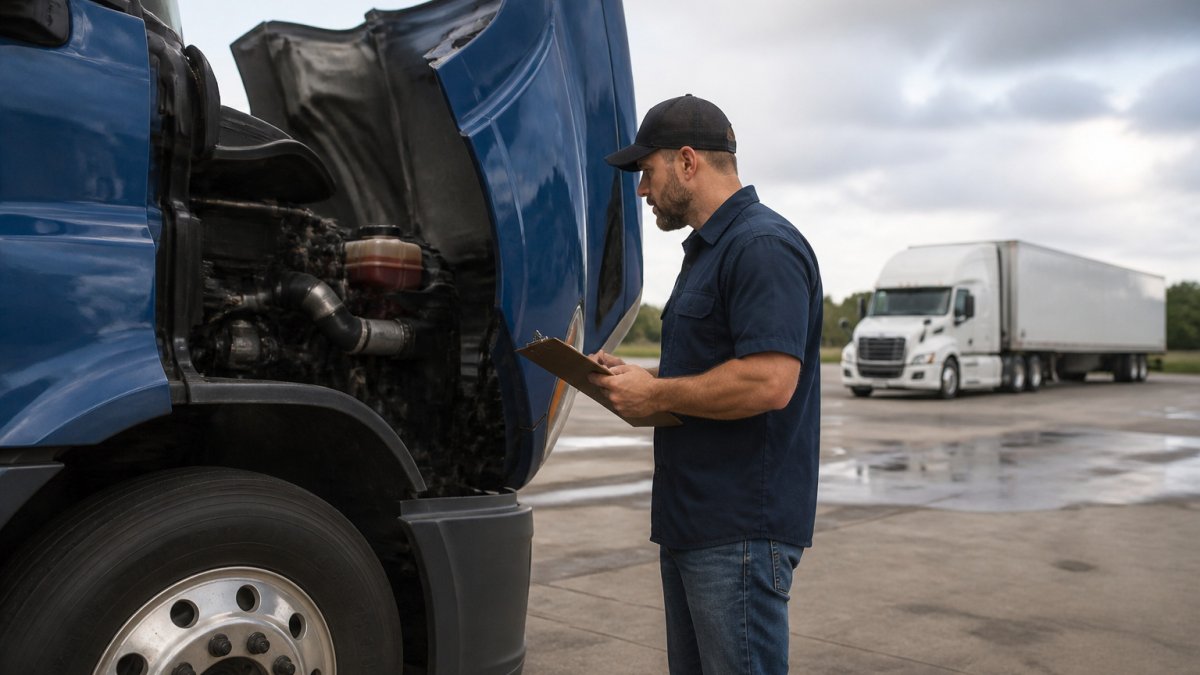
With the hood open, a fleet inspection covers the systems that keep the engine and accessories operating reliably. Fluid levels and condition are checked, including engine oil, coolant, power steering fluid, transmission fluid, and windshield washer fluid as appropriate for the vehicle. Technicians look for leaking hoses, worn belts, loose clamps, damaged wiring, and signs of coolant or oil loss.
Battery condition and cable connections are especially important for trucks that make frequent starts, operate auxiliary equipment, or sit between jobs. Corrosion, loose connections, and weak batteries can create no-start calls at the worst possible time.
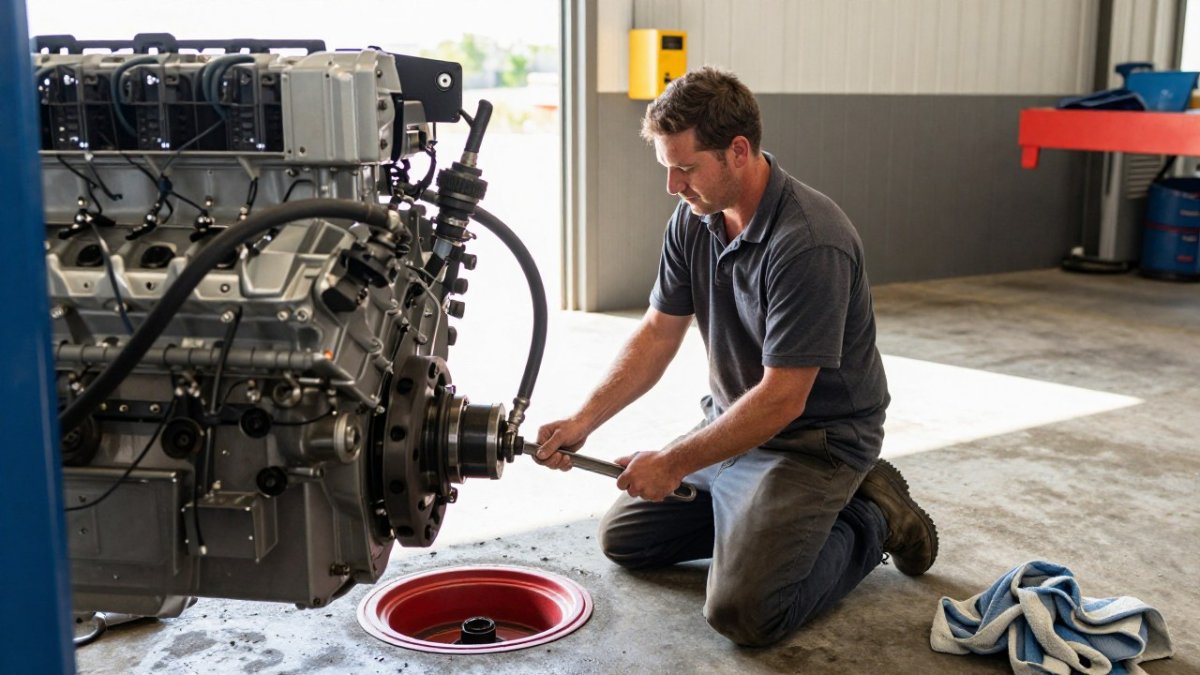
Underneath the truck, the inspection becomes more detailed. Technicians examine the driveshaft, U-joints, differential area, exhaust system, steering linkage, suspension, shocks, bushings, mounts, and fluid leaks. This is where a vehicle lift and experienced eyes make a difference. A small amount of play in a steering component or a deteriorating bushing may not be obvious during a driver walk-around, but it can affect control, tire wear, and long-term repair cost.
Diagnostics Help Find Problems That Cannot Be Seen
Modern diesel trucks store valuable information in their electronic control systems. When a warning light is on, or when the truck has a performance concern, technicians may connect diagnostic equipment to read fault codes and operating data. That data can point toward engine, transmission, aftertreatment, sensor, electrical, or communication issues.
A code is a starting point, not an automatic parts order. A quality inspection combines diagnostic information with testing and physical checks. For example, a DPF-related fault may involve the filter itself, but it could also be connected to sensor readings, exhaust leaks, operating conditions, or another issue affecting regeneration.
This approach matters because replacing parts without confirming the cause can increase downtime and cost without resolving the real problem. For working fleets, accurate diagnosis is part of protecting the schedule.
The Technician Separates Urgent Repairs From Planned Work
Not every finding has the same priority. Once the inspection is complete, the fleet needs a practical explanation of what was found and what should happen next. The most useful reports separate safety-critical or out-of-service concerns from recommended repairs and items to monitor.
An active brake issue, a damaged tire, a major fluid leak, or unsafe steering play needs immediate attention. Other items may be safely planned around the truck's workload, such as tires approaching replacement range, a minor seep, aging belts, or service coming due in the near future.
That distinction is where fleet maintenance becomes a partnership rather than a string of emergency repairs. A shop should help the customer understand the condition of the truck, the consequences of waiting, and the best timing for the work. It depends on the truck's route, available backup equipment, budget, and the risk of continued operation.
Inspection Results Should Lead to a Maintenance Plan
The inspection is only useful if the findings lead to action. For some fleets, that means authorizing immediate repairs and scheduling follow-up work during the next planned downtime. For others, it means grouping similar service needs across several trucks so parts, labor, and scheduling can be managed more efficiently.
At Ideal Truck Service, the focus is on helping working fleets address the conditions that threaten uptime while building a practical plan for the repairs that can be scheduled. That may include preventive maintenance, brake service, engine repair, DPF-related diagnosis, or mobile support when bringing a truck to the shop is not the best option.
A thorough fleet inspection gives you more than a checklist. It gives you time to make informed decisions before a small concern becomes a missed delivery, a canceled job, or an unexpected repair bill. The best time to find a problem is when your truck is safely in a service bay, not when it is needed most.

Comments